
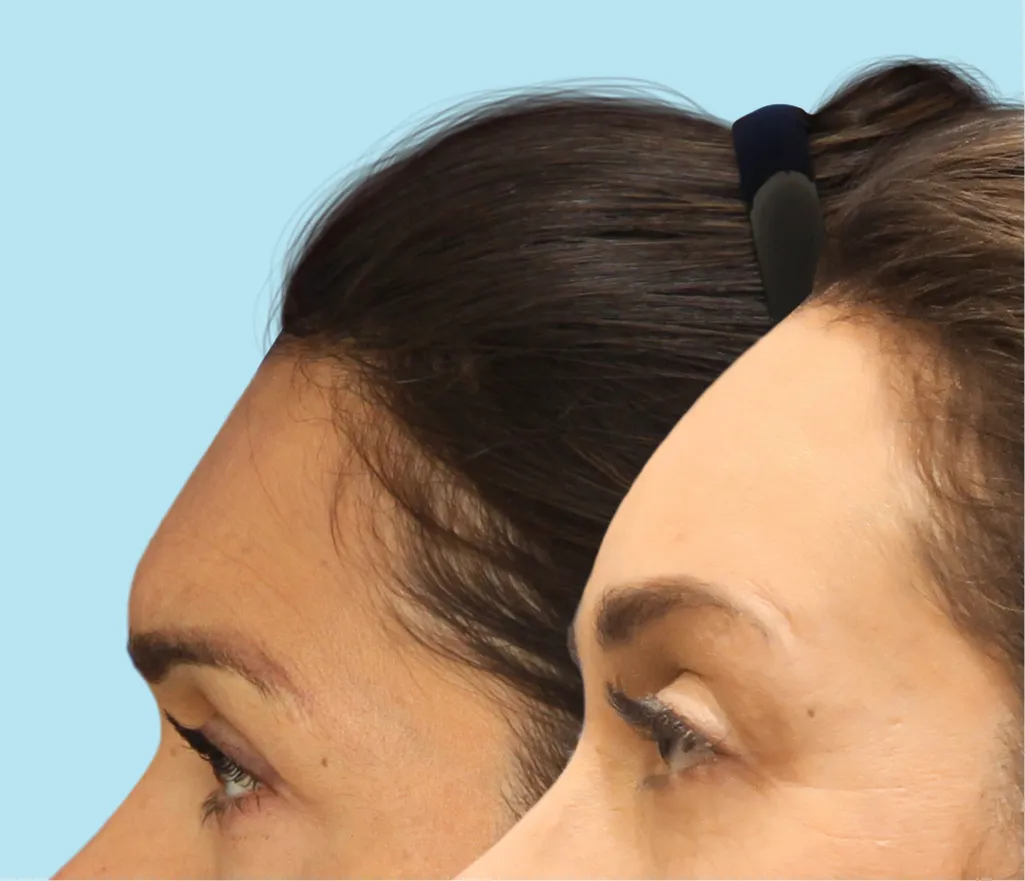
A high hairline can often make the forehead appear disproportionately large, affecting your overall facial symmetry. If you are looking to lower your hairline and achieve a more balanced look, you’ve likely come across two main paths: forehead reduction vs. hair transplant. While both aim to harmonize your facial proportions, they use entirely different approaches. In this guide, we’ll explore the benefits, costs, and results of each to help you make an informed decision.
What is Forehead Reduction Surgery?
Forehead reduction surgery, also known as hairline lowering surgery, is a surgical procedure where a portion of the forehead skin is removed to physically move the scalp forward.
The Procedure and Immediate Results
- How it works: The surgeon makes a precise incision along the natural hairline, removes a strip of excess forehead skin, and pulls the scalp down to the new, lower position.
- Instant Transformation: Unlike transplants, the “before and after” results are visible the moment the stitches are removed.
- Ideal Candidates: This is best suited for individuals with high foreheads who possess good scalp elasticity (laxity).
Hair Transplant for Forehead Reduction
For many, a hair transplant is the preferred non-linear approach to lowering the hairline, particularly for those who wish to avoid invasive skin excision.
The FUE/DHI Method
- The Process: Instead of cutting skin, individual hair follicles are extracted from the back of the head and moved to the forehead to “fill in” and create a new hairline.
- Safety First: While “forehead reduction surgery gone wrong” is a common fear involving scarring or nerve issues, hair transplants offer a minimally invasive alternative with no risk of a long linear scar.
- Natural Flow: This method allows for a customized, soft hairline that mimics your natural hair growth direction.
Key Comparison: Forehead Reduction vs. Hair Transplant
| Feature | Forehead Reduction Surgery | Hair Transplant (FUE/DHI) |
|---|---|---|
| Result Time | Immediate | 6–12 Months |
| Scarring | Linear scar along the hairline | No linear scars (micro-dots) |
| Recovery | 1–2 weeks | 3–7 days |
| Density | High (uses existing hair) | Depends on donor area |
| Surgical Risk | Higher (skin excision) | Lower (minimally invasive) |
Cost Breakdown: Is it Worth the Investment?
Understanding how much is forehead reduction surgery is a major factor for patients considering medical tourism.
- Global Pricing: In the US or UK, forehead reduction surgery costs can exceed $10,000. In Turkey, through Aesthetic Airways, you can access world-class surgeons at a fraction of that price.
- Budgeting: Often, a hair transplant is more affordable than surgical reduction, especially if the area to be covered is relatively small.
- The Turkey Advantage: While Korea is famous for these procedures, Turkey offers highly competitive packages that include luxury accommodation and VIP transfers, making it a top global destination.
Forehead Reduction Before and After: What to Look For?
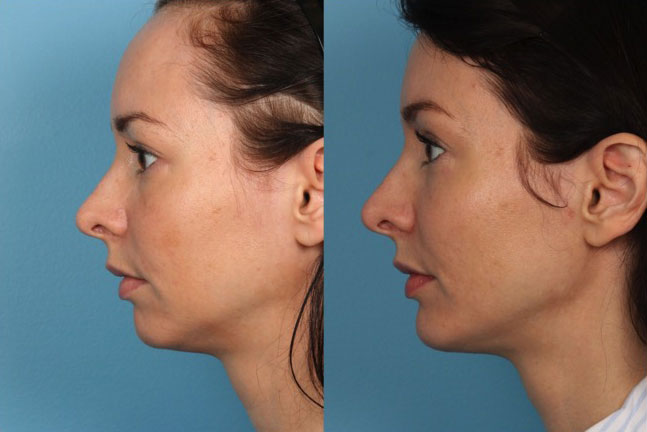
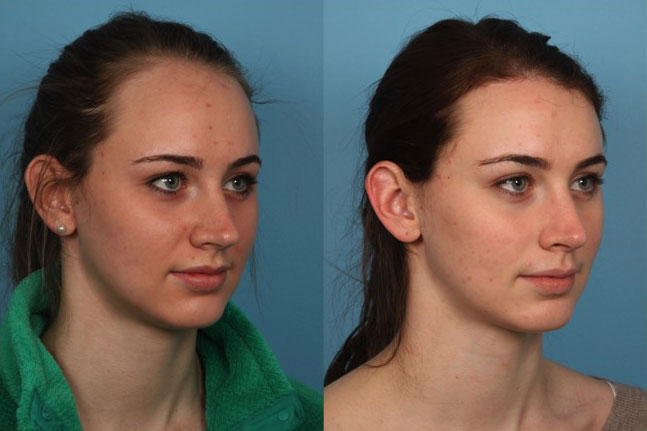
- Surgical Photos: When reviewing galleries, pay close attention to the quality of the scar healing. A skilled surgeon hides the incision within the transition zone of the hair.
- Transplant Photos: Look for the naturalness of the hairline. Ensure the density looks consistent and that the “widow’s peak” or corners look realistic.
Which One is Right for You?
- Choose Forehead Reduction if: You have a naturally high hairline but no active hair loss, you want instant results, and your scalp is flexible enough.
- Choose Hair Transplant if: You want to avoid a surgical scar, you have a receding hairline (male or female pattern baldness), or you prefer a minimally invasive recovery.
FAQ: Common Concerns
1. Can I combine both procedures?
Yes. Some patients undergo a surgical reduction first to achieve a significant drop, followed by a hair transplant months later to hide the linear scar and add more natural density.
2. Is forehead reduction surgery painful?
The procedure is performed under local anesthesia or sedation. While you won’t feel pain during the surgery, you may experience tightness and mild discomfort during the first 48 hours of recovery.
3. Will the scar from a forehead reduction be visible?
If performed by an expert, the scar is placed along the “trichophytic” incision line, allowing hair to grow through the scar to camouflage it.
4. How long does a hair transplant take to look natural?
You will see initial growth around 3–4 months, but the full, thick results typically take 12 months to fully mature.
5. What are the risks of a “forehead reduction surgery gone wrong”?
Potential risks include visible scarring, nerve damage (numbness), or hair thinning near the incision. Choosing an accredited clinic like Aesthetic Airways minimizes these risks significantly.
6. Can men get forehead reduction surgery?
It is generally less recommended for men who may experience future balding, as the scar could become exposed. Hair transplants are usually the gold standard for men.
Conclusion: Achieve the Perfect Proportions
Whether you opt for the immediate results of forehead reduction surgery or the soft, scar-less finish of a hair transplant, your journey to a more confident you starts with the right advice. At Aesthetic Airways, we specialize in matching patients with the most effective treatments for their unique facial structure.
Are you tired of hiding your forehead? Contact Aesthetic Airways today for a free consultation and let our experts help you choose the best path to your new look.
Resources & References
- American Society of Plastic Surgeons (ASPS): For comprehensive clinical overviews of forehead reduction techniques and patient safety protocols.
Visit ASPS – Hairline Lowering Guide - International Society of Hair Restoration Surgery (ISHRS): The leading global authority on hair transplant excellence (FUE & DHI).
Visit ISHRS – Hair Restoration Resources