
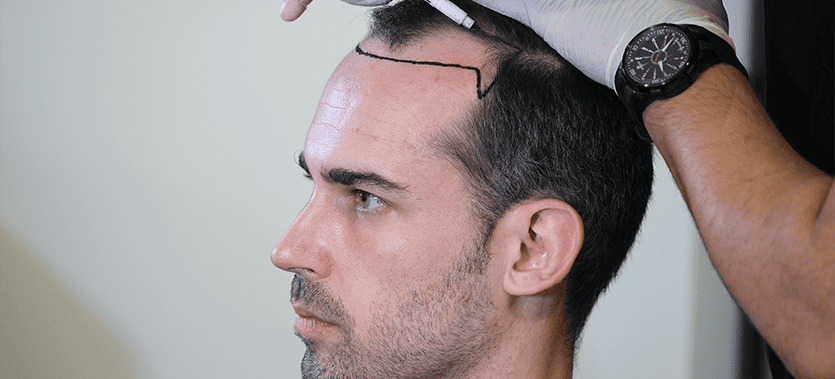
Many people still use the term “hair plugs” to describe modern hair restoration, but the technology has changed drastically. While the “doll-hair” look of the 1970s and 80s is what often comes to mind, today’s results are virtually indistinguishable from natural hair. The industry is rapidly moving away from the outdated hair plug procedure in favor of advanced FUE (Follicular Unit Extraction) and DHI (Direct Hair Implantation) transplants.
What are Hair Plugs? (The Old School Era)
To understand why they are obsolete, we must ask: what are hair plugs? In the “old school” era, the procedure involved removing large, circular patches of skin and hair (often 4mm in diameter) and “plugging” them into thinning areas.
The Appearance: This technique resulted in a “patchy” or plugged-in hair look that lacked density and natural flow.
Celebrity Influence: High-profile rumors, such as Elon Musk hair plugs, MGK hair plugs, or John Cena hair plugs, often trend as people compare their older, stiffer hairlines to the softer, modern looks achieved through corrective transplants.
Modern Hair Transplants: The Superior Alternative
Modern techniques like FUE and DHI differ significantly because they move individual follicles rather than large chunks of skin.
Natural Results: Unlike the old hair plug, modern transplants create a seamless hairline.
For Men and Women: While often discussed as hair plugs for men, these superior methods are now a major option for female hair plugs (hairline lowering) because they avoid the unnatural, “pluggy” appearance entirely.
Cost Comparison: Breaking Down the Price Tag
When calculating the price of hair plugs vs. modern transplants, the investment is clear:
Obsolete Tech: Traditional hair plugs are mostly obsolete, making it expensive to find a surgeon still practicing them—or more commonly, expensive to repair old ones.
Global Pricing: The hair plugs cost in the US or UK can be incredibly high. In contrast, Turkey has become the global hub because modern transplants offer better value for money.
Affordability: Hair plugs for men in Turkey (via FUE) are significantly more affordable while providing higher success rates.
Check Out the Full Price Breakdown: Curious about how much you can save? Read our detailed comparison on to see why Turkey is the top choice for 2026.
Hair Plugs Before and After: Expectation vs. Reality

the difference in longevity and aesthetics is striking:
Longevity: Old plugs were permanent but often led to scarring or “island” looks as surrounding hair thinned.
Modern Permanence: Modern transplants are permanent and adapt to natural aging, preventing the complications associated with the old-style plug.
Pros and Cons: A Side-by-Side Comparison
1. Hair Plugs (The Old Way)
Hair plugs involved removing large, circular chunks of skin and hair from the back of the head and “plugging” them into balding areas. Because the grafts were so large, they often left gaps of bare skin between them.
Pros:
Historical Milestone: It was the first procedure to prove that hair could be moved and continue to grow.
Permanence: Like modern transplants, the hair was genetically resistant to balding and would grow for life.
Cons:
Unnatural Look: Known for the “Barbie doll” effect where hair grows in thick, unnatural clumps.
Severe Scarring: Left large, visible “pothole” scars in the donor area that were impossible to hide with short hair.
Limited Styling: Because the hairline was so harsh and tufted, patients often had to comb their hair in specific ways to hide the “plugs.”
2. Modern Hair Transplant (FUE & FUT)

Modern techniques focus on the Follicular Unit, which is how hair naturally grows (in groups of 1 to 4 hairs). There are two primary methods:
FUE (Follicular Unit Extraction): Each unit is harvested one by one.
FUT (Follicular Unit Transplantation): A thin strip of skin is removed and then dissected into micro-grafts under a microscope.
Pros:
Total Realism: Surgeons can design a soft, natural hairline that is virtually indistinguishable from real hair.
Minimal Scarring: FUE leaves tiny dot scars that are invisible even with a short buzz cut.
High Success Rate: Modern grafts have a survival rate of 90–95% or higher.
Quick Recovery: Most patients return to work within 3 to 5 days.
Cons:
Higher Cost: Requires a large, specialized surgical team and many hours of precision work.
Delayed Results: It takes 6 to 12 months for the transplanted hair to fully grow in.
Requires Donor Hair: You must have enough healthy hair on the back or sides of your head to move to the front.
Read the Full Comparison between FUE vs FUT hair transplant
Why Turkey is the Global Leader in Hair Restoration
At Aesthetic Airways, we don’t do “plugs”; we offer artistic restoration.
Sapphire FUE: We utilize Sapphire FUE technology to create smaller incisions, ensuring the plugged-in hair look is a thing of the past.
VIP Experience: Our packages include luxury hotel stays, VIP transport, and world-class surgical expertise.
Frequently Asked Questions (FAQs)
How much are hair plugs compared to FUE?
Traditional plugs are rarely performed now; FUE offers much better results for a similar or lower investment in specialized clinics like ours.
Can I fix old, unnatural hair plugs?
Yes, we specialize in repairing the “doll-hair” look by softening the hairline with individual FUE grafts.
Are hair plugs for women different from men?
The goal is the same, but for women, we focus on lowering the hairline without visible scarring, which only modern FUE can achieve.
How long will hair plugs last?
Choosing Your Best Look
The term “hair plug” belongs in the history books; modern hair transplants are the future of confidence. Stop searching for “hair plugs near me” and start your journey with the world’s best surgeons in Turkey.
Get your free hair density analysis from Aesthetic Airways today!