
Considering a dental transformation in Turkey? You’re not alone. Thousands choose this beautiful country for high-quality, affordable dental care. But before you book your flight, you face a critical choice for tooth replacement: Mini Dental Implants vs. Traditional Implants?
This decision isn’t just about price; it’s about the procedure’s invasiveness, recovery time, and, most importantly, the long-term health and stability of your smile. This comprehensive guide breaks down the cost, surgical differences, and expected results for both options, giving you the detailed, informational insight you need to make the best choice for your journey to a new smile.
Understanding the Core Differences: Size and Structure
The most significant difference between mini and traditional implants lies in their design and dimensions. This structural variance dictates everything from the surgical technique to the implant’s strength and application.
Mini Dental Implants (MDIs)
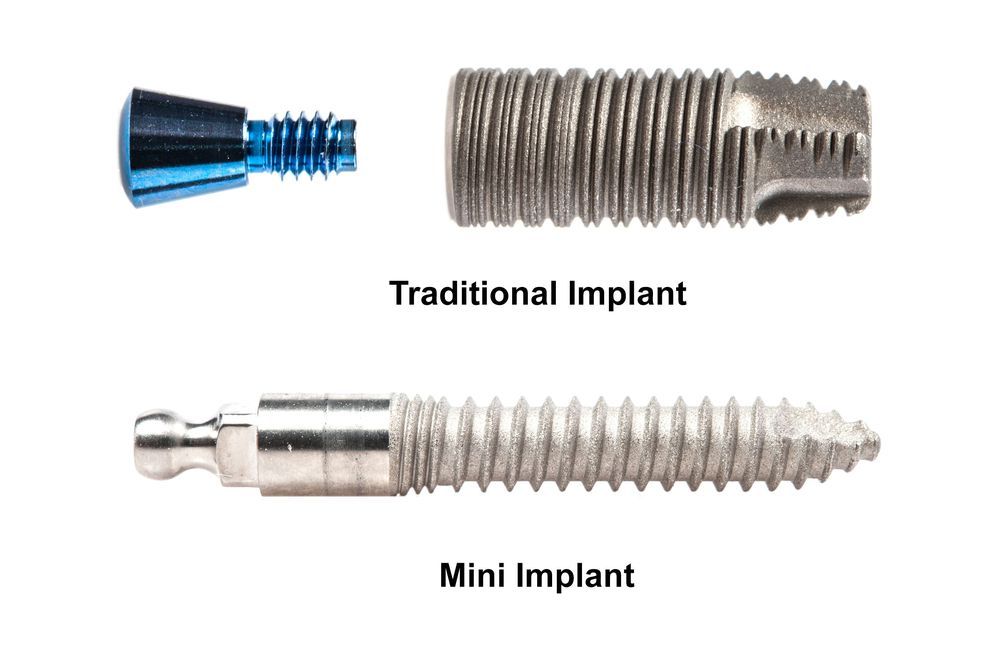
Size: MDIs are significantly smaller, typically less than $3$ mm in diameter (like a toothpick).
Structure: They are a single-piece unit, meaning the implant post and the ball-shaped abutment (connector) are one solid component.
Function: MDIs are primarily used to stabilize loose dentures (overdentures) or replace single, small teeth in areas of low bite pressure.
Traditional Dental Implants (Standard)
Size: Traditional implants are wider and longer, usually ranging from $3.75$ to $6$ mm in diameter.
Structure: They feature a two-piece design—the screw/post (fixture) and a separate abutment that connects the crown. This separation allows for more flexibility and a stronger, wider connection.
Function: They are the “gold standard” for replacing single or multiple teeth and supporting full-arch bridges, especially in high-stress areas like molars.
Procedure & Recovery: Which is More Invasive?
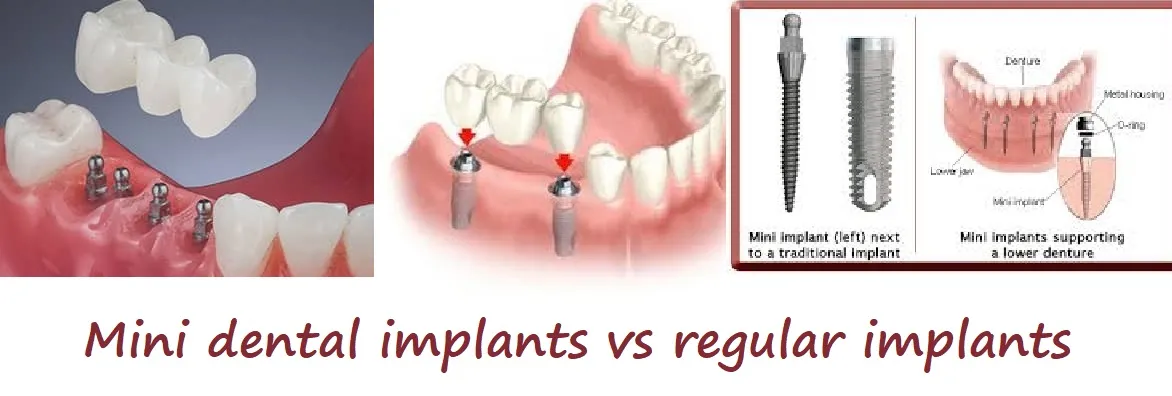
The path to receiving each type of implant is very different, directly impacting your experience and time spent recovering, a crucial factor for dental tourism in Turkey.
The Mini Dental Implant Procedure
Mini implants are famed for their minimally invasive, single-stage procedure.
Surgical Technique: Placement often uses a “flapless” or “keyhole” technique, meaning a small pilot hole is created in the gum without a large incision or stitches.
Procedure Time: The placement is quick, often completed in a single session.
Bone Grafting: They require significantly less bone density, often eliminating the need for complex and costly preliminary procedures like bone grafting.
Recovery: Patients experience less post-operative pain and swelling, with a much faster initial healing time. Immediate loading (placing a temporary crown/denture on the same day) is often possible.
The Traditional Dental Implant Procedure
Traditional implants require a more extensive and typically two-stage surgical process.
Surgical Technique: The dentist must make an incision (flap) in the gum to expose the jawbone, where a precise hole is drilled to place the larger implant post. Stitches are required.
Bone Grafting: If the patient has experienced significant bone loss, a bone graft is frequently required months before the implant placement to build up sufficient density.
Osseointegration: A critical 3-6 month healing period is needed for the implant to fully fuse with the jawbone (osseointegration) before the final crown can be attached. This usually requires two separate trips to your clinic in Turkey.
Recovery: Recovery is longer, with more potential for swelling and discomfort immediately following the surgery.
Cost Comparison: The Turkey Advantage
Cost is a primary driver for people seeking dental treatment in Turkey. In this region, both options are significantly more affordable than in Western countries, but the price difference between MDIs and Traditional Implants remains substantial.
| Feature | Mini Dental Implant (MDI) | Traditional Dental Implant |
| Diameter | $\le 3$ mm | $3.75$ – $6$ mm |
| Average Cost per Implant in Turkey | $400 – $800 | $500 – $1,500 |
| Procedure Type | Minimally invasive, 1-stage | More invasive, often 2-stage |
| Bone Grafting | Rarely needed, suitable for low bone density | Often needed if bone density is low |
| Healing Time | Faster (often immediate loading) | Longer (3-6 months for osseointegration) |
| Best Used For | Denture stabilization, single small teeth | Single/multiple teeth, full-arch reconstruction |
Statistic: In Turkey, the average cost for a single traditional dental implant often ranges between $500 and $1,500, while a mini dental implant can start as low as $400 per unit (Source: Turkey Luxury Clinics). This represents a fraction of the cost in the US or UK, where traditional implants often start at $3,000+ per unit.
Long-Term Results, Stability, and Longevity
While MDIs offer immediate benefits, the main trade-off is often their strength and expected lifespan compared to their robust, traditional counterparts.
Pros of Mini Dental Implants
Cost-Effective: Substantially lower price, making them a budget-friendly option.
Less Invasive: Faster surgery and significantly reduced healing time—perfect for minimizing travel time abroad.
Low Bone Requirement: Ideal for patients with insufficient jawbone who want to avoid bone grafting.
Denture Stabilization: Excellent solution for securing loose lower dentures for improved comfort and function.
Cons of Mini Dental Implants
Limited Strength: Not designed to withstand the heavy biting forces of back teeth (molars).
Longevity Concerns: While they can last for years, they generally have a shorter projected lifespan than traditional implants. Some studies suggest a potentially higher failure rate compared to standard implants in the long term (Source: PMC).
Potential for Maintenance: The O-rings used to secure dentures to MDIs may need periodic replacement.
Risk of Fracture: Their smaller, single-piece structure makes them slightly more prone to fracture under extreme stress.
Pros of Traditional Dental Implants
Exceptional Stability and Strength: Their larger size and two-piece design provide superior stability for all areas of the mouth, handling maximum bite forces.
Gold Standard Longevity: With proper care, traditional implants have a long-term success rate consistently exceeding 95% and are designed to last a lifetime (Source: Today’s Dental Grand Prairie).
Versatility: Suitable for replacing any tooth, supporting multi-tooth bridges, or full-mouth restorations.
Bone Preservation: They effectively stimulate the jawbone, preventing future bone loss (atrophy).
Cons of Traditional Dental Implants
Higher Initial Cost: Significantly more expensive than MDIs.
More Invasive Surgery: Requires a more complex surgical procedure and often involves stitches.
Longer Treatment Timeline: The mandatory 3-6 month osseointegration period means a longer total treatment time and potentially multiple trips to Turkey.
Requires Sufficient Bone: Patients with low bone density must undergo bone grafting, adding to the cost and time.
Which Implant is Right for Your Turkey Dental Trip?
Choosing between the two depends on your specific needs, the condition of your jawbone, and your budget.
Choose Mini Dental Implants if: You need to stabilize loose dentures, you have limited bone density and want to avoid bone grafting, your budget is a major factor, or you are replacing a small, low-pressure tooth (like a lower front tooth). They are excellent for fast, minimally invasive solutions.
Choose Traditional Dental Implants if: You are replacing molars or multiple teeth, you need maximum strength and long-term durability, you want a solution that closely mimics a natural tooth, and you are comfortable with a two-stage procedure that requires a few months of healing.
The high standards of Turkish dental clinics mean you will receive expert advice regardless of your choice. However, a personal consultation and advanced imaging are essential to determine which solution is best suited to your unique anatomical structure.
Mini Dental Implants vs. Traditional Implants: Frequently Asked Questions (FAQ)
Q1: Are Mini Dental Implants as strong as Traditional Implants?
A: No. Mini implants are strong enough for denture stabilization and small-tooth replacement, but their smaller diameter and one-piece design mean they cannot handle the same extreme, long-term biting and chewing forces as the wider, more robust traditional implants.
Q2: How long do I need to stay in Turkey for the implant procedure?
A: For Mini Implants, the procedure can often be completed in a single, short trip (sometimes with immediate loading). For Traditional Implants, you will typically need two trips: one for placement (a few days) and a return trip 3-6 months later for the final crown attachment.
Q3: What is the success rate of the two types of implants?
A: Both have a high success rate. Traditional implants boast a success rate exceeding 95% over 10 years when properly cared for. Mini dental implants typically have a slightly lower but still high success rate, often quoted between 92% and 95%.
Q4: Can I get mini implants if I have severe bone loss?
A: Yes, this is one of the main advantages of MDIs. They are often the preferred choice for patients with significant bone atrophy as they require much less jawbone volume than traditional implants, eliminating the need for a bone graft.
Q5: What is the main structural difference between Mini Dental Implants and Traditional Implants?
A: The primary difference is size and structure.
Mini Implants (MDIs): Are small (less than $3$ mm in diameter) and are a single-piece unit, meaning the post and the connector (abutment) are one solid piece.
Traditional Implants: Are larger (typically $3.75$ mm to $6$ mm) and use a two-piece system, consisting of the fixture (screw) and a separate abutment that attaches the final crown.
Q6: What are Mini Dental Implants primarily used for?
A: MDIs are best suited for two main applications:
Denture Stabilization: They are an excellent, cost-effective solution for securing loose lower dentures, greatly improving stability, chewing function, and comfort.
Small Tooth Replacement: They can be used to replace small single teeth, often in the lower front area, where biting forces are relatively low.
Q7: Which type of implant is considered the “Gold Standard” for tooth replacement?
A: Traditional Dental Implants are considered the gold standard. Their larger size, robust two-piece structure, and decades of clinical success mean they offer the superior strength, stability, and longevity required for replacing any tooth, especially high-stress molars and full-arch restorations.
Ready to Transform Your Smile in Turkey?
Choosing between mini and traditional dental implants is a major health and financial decision. By understanding the differences in procedure, cost, and long-term outlook, you are now equipped to discuss your options confidently with a specialist in Turkey.
Don’t let missing teeth hold you back any longer. Start your journey to a permanent, confident smile today.
Contact aestheticairways today to find a highly-rated Turkish dental clinic that can provide a personalized assessment and tailor the perfect treatment plan for you.