
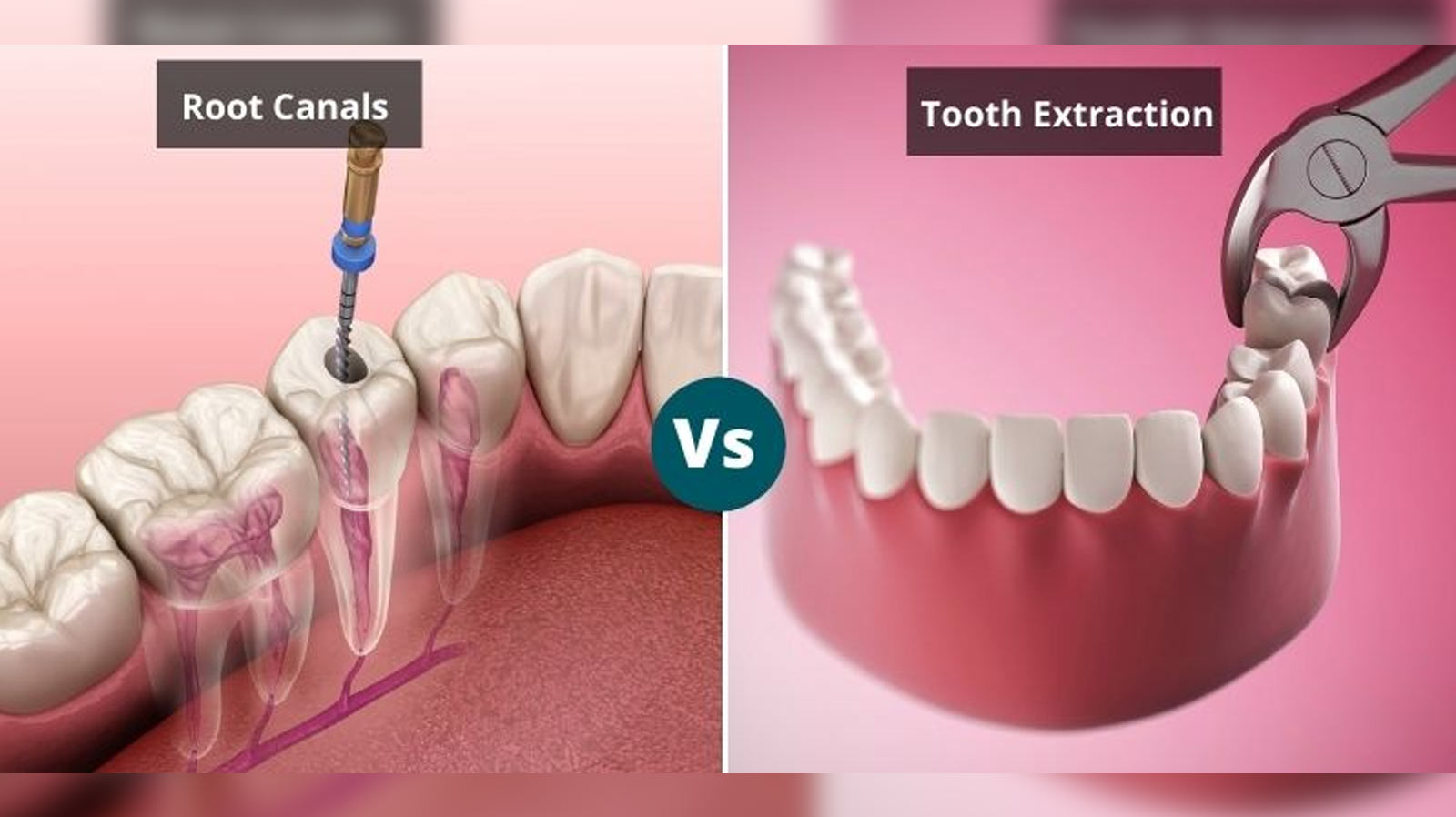
Are you experiencing sharp tooth pain and facing a crucial decision: undergo a complex Root Canal treatment, or choose the quicker solution of tooth extraction? This choice significantly impacts your long-term oral health and finances.
It is understandable that you seek the best treatment in top facilities, especially if you are planning your dental care in Turkey. In this detailed guide, we provide a comprehensive comparison between Root Canal and extraction, explaining why dentists consistently recommend saving your natural tooth as the primary option.
Root Canal Explained
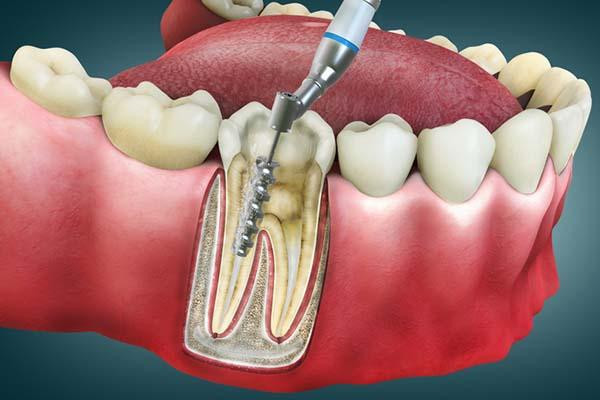
Root Canal treatment, also known as Endodontic Treatment, is a procedure designed to remove inflamed, infected, or damaged nerve tissue from inside the tooth. This process is necessary when the tooth pulp is damaged due to deep decay, fracture, or trauma.
After removing the pulp, the canals are thoroughly cleaned, shaped, and disinfected. Finally, the canals are sealed with a rubber-like material to prevent re-infection. The treated tooth is then often covered with a dental crown to protect and strengthen its structure.
Reasons for Root Canal Treatment
A Root Canal becomes necessary when bacteria reach the center of the tooth (the pulp), causing severe pain that can radiate into the jawbone. The primary goal is to eliminate the infection and prevent its spread.
Diagnosis: When is a Root Canal Needed?
Root Canal treatment is typically required in the following scenarios:
- Irreversible Pulpitis: When pain is severe, constant, and does not subside with ordinary painkillers.
- Abscess Formation: A pocket of pus forms at the tip of the tooth root, resulting from an untreated infection.
- Fractures and Cracks: If a crack or fracture is deep enough to expose the pulp to bacteria.
- Extreme Sensitivity: A painful response to hot or cold temperatures that lingers for several minutes after the stimulus is removed.
Saving Your Natural Tooth
The guiding principle of modern dentistry is that preserving the natural tooth is always the superior option. Nothing can truly match a natural tooth’s biting strength, feel, and its role in maintaining jawbone structure.
Other Endodontic Treatment Options
In rare cases, your dentist might suggest alternatives before or after the Root Canal procedure:
- Pulpotomy: Removing only a portion of the coronal pulp tissue, often used in children’s teeth.
- Apicoectomy: A surgical procedure to remove the inflamed tip of the tooth root if the conventional Root Canal treatment fails.
Benefits of Root Canal Treatment
Choosing Root Canal treatment brings long-term benefits that extend far beyond simply eliminating pain:
- Preservation of Natural Appearance: The treated tooth remains in place, maintaining the natural look of your smile and facial structure.
- Continued Chewing Function: It allows you to chew food efficiently and with strength comparable to a healthy tooth.
- Prevention of Tooth Movement: The presence of the tooth prevents adjacent teeth from drifting or shifting into the gap, a common issue after extraction.
- High Success Rate: Statistics show that Root Canal treatment boasts a success rate of approximately 95%, and the treated tooth can last a lifetime with proper care. [Source 1 Placeholder]
Root Canal vs Extraction: A Detailed Comparison
The choice between Root Canal and tooth extraction is fundamentally a trade-off between preservation and replacement.
Saving vs. Replacing: The Core Difference
| Feature | Root Canal Treatment | Tooth Extraction |
|---|---|---|
| End Result | The tooth is saved and remains functional. | Tooth loss requires replacement (bridge or implant). |
| Bone Impact | Preserves the jawbone and natural root structure. | Leads to jawbone atrophy over time due to the lack of a root. |
| Initial Cost | The initial cost is often less than extraction + implant. | Extraction cost is low, but followed by the significant cost of replacement. |
| Treatment Time | Requires one to two appointments. | One appointment for extraction, followed by months of waiting for bone healing before replacement. |
Long-Term Costs: Root Canal vs. Implant
When considering costs, it is essential to factor in the alternative solution after extraction. The cost of a Root Canal and a crown remains, in most cases, lower than the cost of extraction followed by a dental implant and final restoration. Studies suggest that the cost of a dental implant may exceed the cost of a Root Canal and crown by 200% to 400%. [Source 2 Placeholder]
This is why patients seeking high-quality dental treatments in Turkey often prefer the Root Canal whenever feasible.
Myths About Root Canals
Many myths circulate about Root Canal treatment, leading many people to fear the procedure:
- Myth: Root Canal treatment is extremely painful.
- Fact: Thanks to modern techniques and effective local anesthesia, the treatment itself is not painful. On the contrary, the Root Canal eliminates the agonizing pain caused by the infection.
- Myth: Extraction is faster and better for overall health.
- Fact: Extraction creates a gap that affects alignment and jaw health. There is no scientific evidence linking modern Root Canal treatment to systemic diseases. [Source 3 Placeholder]
- Myth: The treated tooth will only last for a short period.
- Fact: The success rate of the Root Canal is very high, and a properly treated tooth can last a lifetime if supported by an adequate crown and good oral hygiene.
FAQs
Will I need a crown after a Root Canal?
In most cases, yes. After the pulp is removed and the tooth is hollowed out, its structure becomes weaker and more susceptible to fracture. Placing a crown on the treated tooth is highly recommended to fully strengthen and protect it from chewing forces.
How long does a treated tooth last?
If the treatment is performed correctly and the crown is properly fitted, the tooth treated with a Root Canal can last for a very long time, often enduring for the patient’s entire life.
What happens if I don’t get a Root Canal?
If the infection is left untreated, bacteria can spread to surrounding tissues and the jawbone, causing chronic abscesses and eventually leading to the need for tooth extraction and potential inflammation of adjacent tissues.
Is high-tech treatment available in Turkey?
Absolutely. Major clinics in Turkey are renowned for having specialist endodontists who utilize the latest technologies, such as operating microscopes and delicate instruments, ensuring the highest success rates and precision in Root Canal treatment.
How long does a root canal last?
A root canal typically lasts between 10 and 20 years, and in many cases, it can last a lifetime. Its longevity depends on several factors, including whether the tooth is protected with a crown, your oral hygiene habits, the location of the tooth (front teeth generally last longer than molars), and the overall success of the procedure. Studies show that properly restored root canal–treated teeth have 10-year survival rates of around 86% or higher.
What is done during a root canal?
During a root canal procedure, the dentist removes the infected or damaged pulp, thoroughly cleans and disinfects the inside of the tooth, and then fills the canals with a rubber-like material called gutta-percha. The tooth is sealed and later restored with a filling or crown to protect it and restore normal function. The process includes numbing the area, creating a small opening in the tooth, removing decay and nerve tissue, shaping and sealing the canals, and completing the restoration — all while relieving pain and saving the tooth from extraction.
Saving Your Smile Starts with an Expert Decision
Choosing to save your natural tooth via Root Canal is a wise, long-term investment in your oral health. This decision helps you avoid the high costs and complex procedures that follow extraction. If you are looking for exceptional and precise Root Canal care or any other cosmetic dental treatment, you need a clinic that combines expertise with advanced technology.
At aestheticairways in Turkey, we provide you with a team of certified endodontic specialists who use the latest microscopes to ensure unparalleled precision in your treatment. Do not leave your pain to chance. Contact us today to evaluate your condition and determine the best course of treatment to save your natural smile with the highest global quality standards.