

The Patience of Perfection
Getting a hair transplant in turkey is a transformative journey, but it is certainly not an overnight fix. For many, the decision to undergo surgery is followed by an immediate desire to see a full head of hair. However, hair restoration is a biological process that moves at its own pace.
While the first few months involve healing and “resting” follicles, the real magic happens during the transition of hair transplant 6 months vs. 1 year. In this guide, we’ll break down these critical milestones to help you understand your progress and why patience is your best ally in achieving a natural look.
The 6-Month Milestone: The “New Growth” Phase
By the time you hit the six-month mark, you have officially moved past the “ugly duckling” stage—the initial period of shedding and redness often discussed in clinical recovery timelines.
Visual Progress: At 6 months, you are roughly at 40% to 60% of your final result. You will see a visible outline of your new hairline, and the “patchiness” begins to fill in.
Texture: Do not be alarmed if the new hair appears thin, “wiry,” or slightly frizzy. These are brand-new hairs emerging from the scalp; they haven’t yet reached their full caliber.
Healing: Your scalp is typically fully healed. According to dermatological standards, any lingering redness should be gone, and sensation is beginning to return to both the donor and recipient areas.
The 12-Month Milestone: The “Final Reveal”
The one-year anniversary is the gold standard in the hair restoration industry. This is when the investment you made in yourself truly pays off.
Full Density: By 12 months, you should see 90% to 100% of the results. The “see-through” look that may have persisted at 6 months is replaced by significant volume.
Hair Quality: The hair follicles have matured. The strands become thicker, softer, and begin to match the natural flow of your original hair, a process detailed in trichology research.
Success Rate: Comparing the hair transplant 6 months vs. 12 months mark shows the true value of the procedure. What looked like a “sparse success” at 6 months becomes a seamless transformation at one year.
Side-by-Side Comparison: 6 Months vs. 1 Year
| Feature | 6 Months Post-Op | 1 Year (12 Months) Post-Op |
| Visible Density | 40% – 60% Coverage | 90% – 100% Full Density |
| Hair Texture | Fine, thin, or slightly frizzy | Thick, strong, and natural |
| Scalp Sensitivity | Mostly gone; occasional numbness | Fully restored sensation |
| Styling Options | Limited (hair is still short/uneven) | Full styling and grooming possible |
Factors That Influence the Growth Timeline
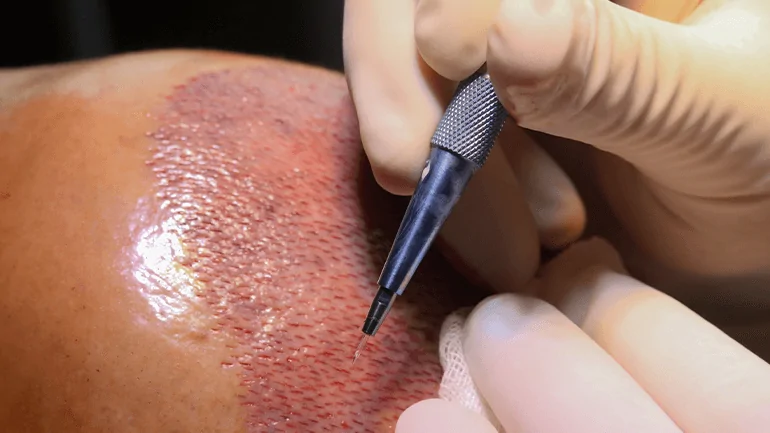
Not every journey is identical. Several factors can influence how quickly you reach your goals:
Technique Used: Modern methods like Sapphire FUE and DHI (Direct Hair Implantation) minimize scalp trauma. DHI, in particular, often shows slightly faster early-stage results due to the specialized implanter tool.
Aftercare: Your commitment to the post-op regimen—including specialized vitamins and PRP (Platelet-Rich Plasma) therapy—plays a massive role in follicle survival.
Biological Variance: Everyone heals differently. Some patients reach their “1-year look” by month 9, while others—particularly those receiving work on the crown—may take up to 14 or 16 months for full maturation.
Read the Full Comparison between FUE vs FUT hair transplant
Managing Expectations: Why You Shouldn’t Panic at 6 Months
It is common for patients to feel a wave of anxiety around month 6. You might think, “Is this all I’m getting?” It is vital to remember that comparing a hair transplant at 6 months vs. 1 year is like comparing a sapling to a tree. The follicles are currently in different stages of the anagen (growth) phase.
Why Documenting Your Journey Matters
At Aesthetic Airways, we recommend taking consistent photos every month. Looking at yourself in the mirror every day makes it hard to notice gradual changes. Our team provides follow-up consultations to monitor your progress and ensure you are on the right track toward your 12-month goal.
FAQ: Common Questions
Q: Is it normal to have slow growth at 6 months?
A: Absolutely. “Late bloomers” are common, and significant sprouting often occurs between months 7 and 9.
Q: When can I see the final result of my crown area?
A: The crown has slower blood circulation than the hairline and often takes 15 to 18 months for full density.
Q: Does the timeline differ for women?
A: The biological timeline is the same, though the visual “filling in” may feel slower if the surrounding hair is very long.
Conclusion: Trust the Process with Aesthetic Airways
Patience is the final, essential ingredient of a successful transplant. While the 6-month mark is an exciting preview, the 1-year mark is the masterpiece.
Are you at the 6-month mark and curious about your progress? Contact the experts at aestheticairways today for a complimentary consultation.
Resources & References
ISHRS (International Society of Hair Restoration Surgery): Patient Guide to Hair Transplant Growth
American Academy of Dermatology (AAD): Post-Surgical Hair Care and Expectations
National Center for Biotechnology Information (NCBI): Clinical Study on FUE and DHI Recovery Cycles