
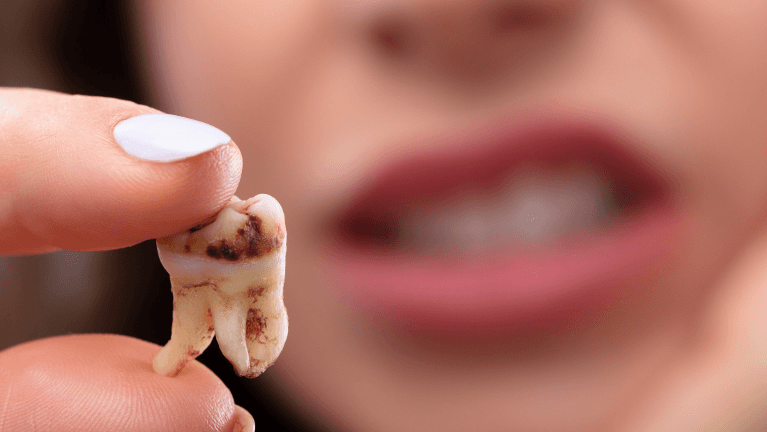
What is Tooth Decay?
Tooth decay is one of the most common health issues worldwide, but the good news is that it is almost entirely preventable. It occurs when bacteria in your mouth produce acids that eat away at the tooth’s surface, or enamel. If left untreated, this leads to a decayed tooth that can cause infection and pain. The core question for many is: How can we prevent tooth decay effectively in our daily lives?
Recognizing the Signs: What Does a Cavity Look Like?
Early detection is the key to avoiding invasive procedures.
- Early Detection: In the initial stages, a cavity may look like a chalky white spot (decalcification). As it progresses, it turns into a brown or black hole.
- Self-Examination: You may have a cavity if you experience sensitivity to cold or sweets, or if you can feel a visible hole with your tongue.
- Checklist of Symptoms:
- Persistent toothache or sharp pain.
- Visible pits or holes.
- Bad breath or an unpleasant taste.
- Dark staining on any tooth surface.
How to Prevent Tooth Decay: 5 Essential Steps

Step 1: Brushing and Flossing – Precision Plaque Removal
Effective prevention isn’t just about how often you brush, but the technique you use.
- The 2-Minute Rule: Use a soft-bristled brush for at least 120 seconds. Divide your mouth into four quadrants and spend 30 seconds on each.
- The 45-Degree Angle: Angle your bristles toward the gum line where plaque accumulates most.
- Why Flossing is Non-Negotiable: Toothbrush bristles cannot reach the tight spaces between teeth. Flossing removes the biofilm that causes 80% of hidden decay.
Step 2: Dietary Habits – Starving the Acid-Producing Bacteria
Sugar isn’t the only culprit; frequency and acidity also play a major role in enamel erosion.
- The 20-Minute Acid Attack: Every time you consume sugar, bacteria produce acid that attacks your enamel for about 20 minutes.
- The Power of Saliva: Saliva neutralizes acids and contains minerals that repair teeth. Drinking water and chewing sugar-free gum with Xylitol can stimulate saliva flow.
- Smart Swaps: Switch processed carbs for “detergent foods” like raw carrots and celery, which mechanically clean teeth while you chew.
Step 3: The Role of Fluoride – The Remineralization Miracle
Fluoride acts as a chemical shield that transforms the molecular structure of your teeth.
- Creating Fluorapatite: When teeth absorb fluoride, it rebuilds weakened enamel to create a structure that is significantly harder and more resistant to acid.
- Systemic vs. Topical: While fluoride toothpaste protects the surface, systemic fluoride (found in water supplies) strengthens developing teeth in children.
- Professional Application: At Aesthetic Airways, we often recommend professional-strength fluoride varnishes for patients with high cavity risks.
Step 4: Regular Dental Checkups – Early Detection & Deep Cleaning
Professional intervention is necessary because Tartar (Calculus) cannot be brushed away at home.
- Ultrasonic Scaling: Once plaque hardens into tartar, only a professional can remove it using specialized tools.
- Digital Diagnostics: Regular visits allow for digital X-rays that can spot early decay between teeth or under old fillings long before they cause pain.
Step 5: Dental Sealants – A Proactive Barrier for Molars
Sealants protect the deep grooves where even the finest toothbrush bristles cannot reach.
- Physical Protection: Molars have deep crevices that trap microscopic food particles. A dental sealant is a thin coating that “fills in” these grooves.
- Long-Term Efficacy: Sealants can reduce the risk of decay in molars by nearly 80%, providing a vital preventive shield for both children and adults.
How to Get Rid of Cavities: Myths vs. Reality
- The Truth: You cannot “cure” a cavity at home once a hole has formed. Natural remedies can only help in the pre-cavity stage.
- Professional Treatment: Once decay reaches the dentin, a dentist must remove the decay and apply a filling or crown.
- Early Intervention: You can stop tooth decay when it is still in the “white-spot” stage by using high-fluoride treatments to reverse the damage.
Identifying Cavities: How to Tell If You Have a Cavity
It is often hard to tell the difference between a surface stain and a real cavity. Generally, a stain does not cause pain. However, if you feel a sharp pain when biting down or a dull ache that lingers, it is likely a cavity.
Tooth Decay Prevention for Different Ages
- Children: Prevent “baby bottle tooth decay” by never putting a child to bed with a bottle of juice or milk.
- Adults: As we age, gum recession can expose tooth roots, which are more prone to decay. Regular checkups are necessary to monitor aging fillings.
Why Choose Aesthetic Airways for Your Dental Health?
- Holistic Care: We don’t just treat the decayed tooth; we help you build a long-term oral health strategy.
- Advanced Technology: We use digital X-rays to see what a cavity looks like long before it becomes visible to the naked eye.
- Dental Tourism in Turkey: At Aesthetic Airways, you can receive premium preventative care and advanced restorations at a fraction of the cost found in the US or UK.
FAQ: Your Questions Answered
1. How do we prevent tooth decay if we have a high-sugar diet?
Rinse with water immediately after eating sugar and wait 30 minutes before brushing to avoid scrubbing acid into your enamel.
2. How do you get rid of cavities without a drill?
Early-stage decay can sometimes be treated with Silver Diamine Fluoride (SDF) or laser dentistry, which are non-invasive.
3. What are the first symptoms of tooth decay?
White spots on the teeth and mild sensitivity to temperature are usually the first signs.
4. Can a decayed tooth heal itself?
Only in the very early “demineralization” stage. Once a physical hole (cavity) exists, it requires professional repair.
5. Is flossing really necessary for tooth decay prevention?
Yes. Brushing misses about 35% of the tooth’s surface—specifically the areas between teeth where cavities often start.
6. How often should I see a dentist?
Every six months is the standard for professional cleaning and early cavity detection.
7. Does charcoal toothpaste help prevent cavities?
Actually, it can be too abrasive and wear down enamel, making you more prone to decay. Fluoride toothpaste is much safer.
8. Can I get a cavity under a crown?
Yes. While the crown won’t decay, the natural tooth structure underneath and at the gum line still can.
Your Smile, Your Responsibility
Tooth decay prevention is a daily commitment. By following these steps and maintaining regular professional visits, you can ensure a lifetime of healthy smiles. Remember, preventing a cavity today is much easier than repairing a cracked or broken tooth tomorrow.
Don’t wait for the pain to start. Whether you need a routine cleaning to prevent tooth decay or specialized cracked tooth repair, our team is here to help.
Contact Aesthetic Airways today for a comprehensive checkup and protect your smile from cavities.
Resources & Authoritative References
For more clinical information on oral health and cavity prevention, visit these leading organizations:
- American Dental Association (ADA): Tooth Decay
- National Institute of Dental and Craniofacial Research (NIDCR): Tooth Decay Process